Concrete Singh

Call us on
020 8702 9111
Speedy Delivery
Call us on
020 8702 9111

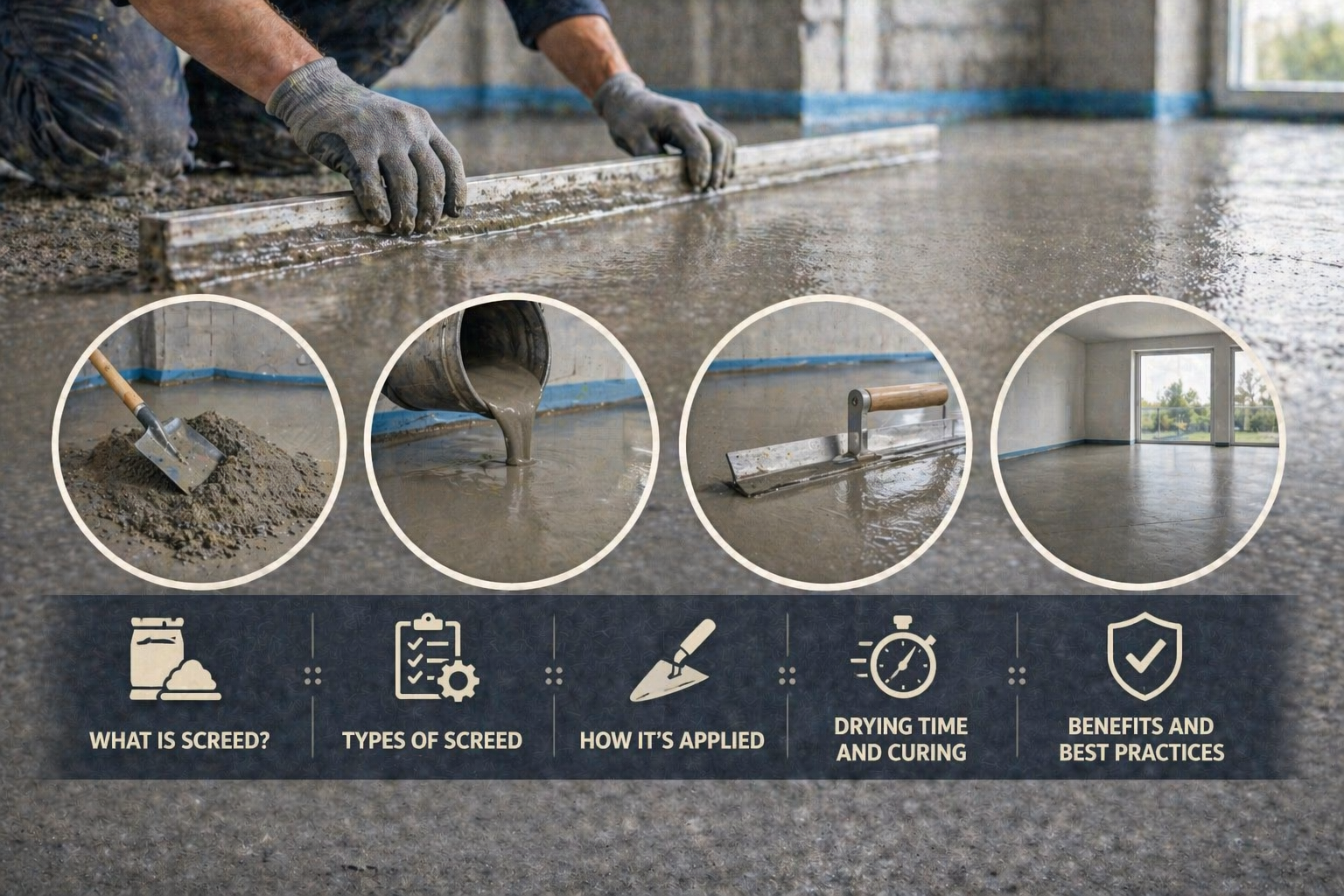
Everything You Need to Know About Screed

What makes a floor fail years before it should, even when the surface finish looks perfect on day one? In most cases, the problem is not the tiles, timber, or vinyl you see, but the screed layer underneath that was rushed, poorly specified, or misunderstood from the start.

This is why contractors and homeowners working with Concrete Singh across London, Barnet, and surrounding areas treat screed as a decision that shapes the entire lifespan of a floor, not just a routine construction step.

In the sections that follow, you will learn what screed is, the different types available, where each works best, and how to choose the right option for your project so you avoid any mistakes and get lasting results. Keep reading.

What Screed Does in a Floor Build-Up

Screed is a thin, engineered layer laid over a concrete sub-base to create a smooth, level surface ready for the final floor finish. Its role is structural as well as practical.

Screed is used to:

  • Create a flat, even surface for tiles, vinyl, timber, or carpet
  • Distribute loads evenly across the floor
  • Protect underfloor heating pipes and services
  • Improve floor strength and long-term performance

Without correctly installed screed, even premium floor finishes are far more likely to fail early, which is why screed selection matters as much as the concrete beneath it.

Common Types of Screed Used in the UK

Keep in mind that screed is not a single material. Different formulations exist to suit different site conditions, timeframes, and performance requirements. This is why you need the best screed supplier near you to ensure you get top quality materials.

Here are some of the main screed options available:

  • Traditional sand and cement screed
  • Liquid (flowing) screed
  • Fast-drying screed
  • Fibre-reinforced screed

Each type behaves differently in terms of drying time, thickness, labour input, and compatibility with underfloor heating.

Screed Types Compared

Screed TypeTypical UseKey BenefitsMain Limitations
Sand & cement screedSmall to medium floorsProven, widely availableLong drying time, labour intensive
Liquid screedLarge areas, UFH systemsSelf-levelling, faster installRequires moisture control
Fast-drying screedTime-sensitive projectsReduced programme delaysHigher material cost
Fibre-reinforced screedHigh-stress areasReduced crackingStill needs correct curing

Traditional Sand and Cement Screed

Sand and cement screed has been used for decades and remains common on domestic projects. It is mixed on-site and manually compacted and levelled.

Pros

  • Familiar installation method
  • Good compressive strength when cured properly
  • Suitable for many residential applications

Cons

  • Longer drying times, often several weeks
  • Greater risk of shrinkage and cracking
  • Heavily dependent on installer skill

These drawbacks are why many contractors now prefer modern alternatives on larger or time-critical jobs.

Liquid Screed and Modern Alternatives

Nowadays, liquid screed has become the preferred option for many residential developments and commercial floors. It is poured rather than laid, allowing it to self-level naturally.

Key benefits of liquid screed:

  • Faster installation over large areas
  • Excellent surface regularity
  • Ideal for underfloor heating systems
  • Reduced labour requirements

Contractors working with Concrete Singh across London and Essex often specify liquid screed for residential and commercial floors. .

Screed Thickness and Drying Times

Drying time is one of the most misunderstood aspects of screed and a common cause of project delays.

Typical drying guidance:

  • Traditional screed: ~1 mm per day (under ideal conditions)
  • Liquid screed: Faster initial drying, but still requires moisture testing
  • Fast-drying screed: Floor coverings possible in days, not weeks

Rushing this stage risks trapping moisture beneath finishes, leading to debonding, mould, or floor failure later on.

Common Screed Problems and How They Occur

When you trace back most screed issues, they often happen due to poor planning or rushed installation. These issues are preventable with the right material choice, preparation, and realistic timelines.

Common problems often appear in the following forms:

  • Cracking from rapid drying or lack of reinforcement
  • Uneven surfaces caused by poor levelling
  • Debonding due to inadequate base preparation
  • Moisture-related failures when finishes are installed too early

Choosing the Right Screed for Your Floor

The correct screed choice depends on:

  • Floor size and layout
  • Time available before final finishes
  • Presence of underfloor heating
  • Expected load and usage

Residential projects often prioritise smooth finishes and heating efficiency, while commercial floors demand durability and speed. Matching the screed system to these needs protects both the build and the budget.

How Concrete Singh Helps You Get Screed Right

The quality of the concrete base, delivery timing, and mix consistency all play a role in how well a floor performs over time. This is where working with an experienced supplier makes a measurable difference.

Concrete Singh supports residential and commercial screed projects across London, Essex, and surrounding parts of the UK by supplying high-quality ready-mix concrete and specialist materials designed to work seamlessly with modern screed systems. 

Our team understands the sequencing required on real sites, not just on paper, which helps reduce delays, minimise waste, and keep flooring programmes on track. 

Conclusion

Screed may sit out of sight, but its impact on floor performance is impossible to ignore. From traditional sand and cement to modern liquid systems, understanding screed types, drying behaviour, and installation requirements helps you avoid costly mistakes and achieve better long-term results.

If you are planning a flooring project and want reliable material supply and expert support across London, or anywhere in the UK, Concrete Singh is ready to help. Feel free to get in touch to make sure your floor is built on the right foundation.

Leave a Reply

Your email address will not be published. Required fields are marked *

Concrete Singh
Privacy Overview

This website uses cookies so that we can provide you with the best user experience possible. Cookie information is stored in your browser and performs functions such as recognising you when you return to our website and helping our team to understand which sections of the website you find most interesting and useful.